
Smart money management for Everyone
Understanding Real Estate Market Cycles
The real estate market doesn't move in a straight line. It breathes. It has a pulse of boom and correction that has repeated throughout history. Many new investors believe the key is to "buy low and sell high," but without understanding the rhythm of the market, they often do the opposite, buying at the peak of excitement and selling in a panic at the bottom.
Real estate markets move in predictable, cyclical phases driven by employment, new construction, and credit availability. Recognizing which phase the market is in provides a tremendous strategic advantage, allowing you to align your actions with the prevailing economic winds instead of fighting against them.
The Four Seasons of the Real Estate Market
The most effective model for understanding these shifts is the four-phase real estate cycle. Think of it not as a circle, but as a continuous wave with distinct peaks and troughs.
1. The Recovery Phase
This is the quiet period that follows a recession or market downturn. It's often the hardest phase to identify because the news is still dominated by negative headlines and general pessimism.
Key Characteristics:
High but stabilizing vacancy rates.
Flat or slowly declining prices.
Minimal new construction, developers are still licking their wounds.
An oversupply of properties from the previous downturn.
The Investor's Playbook: This is the prime window for acquisition. Properties can be purchased below their replacement cost. While cash flow might be tight initially due to high vacancies, this is when the foundation for future appreciation is laid. The goal here is to be brave when others are fearful.
2. The Expansion Phase
The recovery gains momentum and transforms into a full-blown expansion. The economy is improving, jobs are being created, and confidence is returning.
Key Characteristics:
Vacancy rates drop significantly as demand absorbs existing supply.
Rents begin to rise steadily.
Property values increase as confidence grows.
New construction projects are announced but are still years from completion.
The Investor's Playbook: This is the "hold and optimize" phase. Your properties purchased during the recovery are now seeing appreciating values and stronger cash flow. It's a time to ensure your assets are well-managed and to lock in long-term financing at favorable rates. The easy money has been made, but solid gains are still to be had.
3. The Hyper-Supply Phase
The market becomes frothy. The success of the expansion phase leads to overconfidence. Developers, seeing high rents and low vacancies, rush to build, initiating projects that started planning years earlier.
Key Characteristics:
A surge of new construction hits the market.
Vacancy rates begin to tick up as new supply outpaces demand.
Rent growth slows or plateaus.
Property prices reach their peak, often fueled by speculative buying and easy credit.
The Investor's Playbook: This is the phase for caution and preparation. It's not the time for aggressive new purchases at peak prices. Instead, it's a time to sell non-core assets, pay down debt, and build cash reserves. The goal is to fortify your portfolio for the coming downturn.
4. The Recession Phase
The new construction pipeline continues to deliver space into a market that is already softening. The oversupply leads to falling rents and rising vacancies, causing property values to decline.
Key Characteristics:
Significant increases in vacancy rates.
Falling rents and property values.
Some highly leveraged owners may be forced to sell.
Negative media sentiment and a "real estate is a bad investment" narrative.
The Investor's Playbook: This is the phase of opportunity disguised as crisis. While the primary action is to wait and preserve capital, it's also a time to start looking actively for distressed opportunities. As the recession phase deepens and merges into the next recovery, the next cycle of great buying opportunities will emerge.
How to Apply This Knowledge Practically
Knowing the phases is useless without action. Here’s how to implement this knowledge:
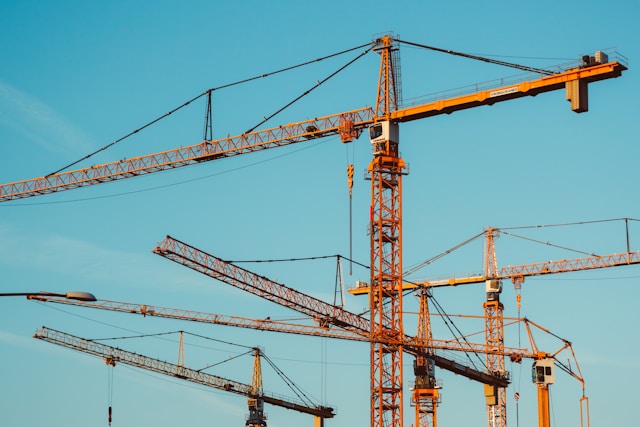
Follow the Cranes, Then Fear Them: Cranes on the skyline signal new construction. This is healthy in the expansion phase but a major warning sign in the hyper-supply phase. When you see a forest of cranes, it's time to be cautious, not greedy.
Track Key Metrics: Don't rely on gut feeling. Monitor local data like months of inventory, vacancy rates, and rent-to-price ratios. A rising number of months of inventory is a clear signal the market is softening.
Ignore the Headlines: The media is notoriously late to the party. They will trumpet a boom at the peak of the hyper-supply phase and declare real estate dead at the bottom of the recession. Your data and understanding of the cycle are your best guides.
Trying to time the real estate market perfectly is a fool's errand. The true power lies not in pinpointing the exact top or bottom, but in knowing what season you are in.
By understanding real estate market cycles, you move from being a reactive investor, buffeted by every market headline, to a strategic one. You buy when there is blood in the streets during the recovery, you hold and profit during the expansion, you sell and prepare during the hyper-supply, and you patiently wait for the next opportunity during the recession.
This disciplined, cycle-aware approach is what separates the professional investor from the amateur. Your next step is to research which phase your local market is currently in, the clues are all there if you know what to look for.