
Smart money management for Everyone
How to Build a Professional Development Plan
You’re busy, your days are full of tasks, and at the end of the quarter, you struggle to point to any real progress in your career. You’re working hard, but are you moving forward? Without a map, you can end up on a path chosen by default, not by design. Your career becomes a series of reactions to opportunities that come your way, rather than a deliberate journey toward a destination you chose.
A Professional Development Plan (PDP) is that map. It is not a document you create for your manager during an annual review and then forget. It is a living, breathing strategy for your most important asset: your ability to earn a living and find fulfillment in your work. It moves you from being a passenger in your career to becoming the driver. This is about creating a concrete, actionable system for growth, especially in a dynamic economic environment where side hustles and new skills are currency.
You Are the CEO of Your Career
Before you write a single word, you must internalize a fundamental shift in perspective. Stop thinking of yourself as an employee. Start thinking of yourself as the CEO of "You, Incorporated."
You are the sole product. Your skills, knowledge, and experience are your services. Your employer, or your clients, are your customers. A CEO is responsible for research and development, marketing, sales, and long-term strategy. A Professional Development Plan is your annual strategic business plan for "You, Inc." This mindset transforms the process from a chore into a critical business activity. It empowers you to take ownership, making your development your responsibility, not your manager’s.
Phase 1: The Strategic Audit – Where Are You Now?
You cannot plot a course if you don't know your starting point. This phase is a clear-eyed, honest assessment of your current professional landscape.
Conduct a Skills Inventory
Create a simple three-column list:
Column A: Current Strengths: What are you genuinely good at? These are the skills you possess that are valued in your role. Think of technical skills (data analysis, graphic design, coding) and soft skills (project management, client communication, conflict resolution). Be specific. "Good with people" is vague. "Skilled at translating technical concepts for non-technical clients" is specific and powerful.
Column B: Skills Needing Improvement: What skills do you have that are a bit rusty or not quite at the level they need to be? Perhaps your public speaking is adequate but could be compelling. Maybe you use Excel but don't know how to use PivotTables, a key tool in your field.
Column C: Critical Gaps: These are the skills you lack entirely but are essential for the next stage of your career. For a developer, this might be learning a new programming language. For a marketer, it could be mastering a new analytics platform. For someone aiming for management, it could be formal training in budgeting or people management.
Define Your Career Vision: The 3-Year Horizon
Where do you want to be in three years? This timeframe is long enough to allow for significant change but short enough to feel tangible and urgent.
Ask yourself:
What title do I want to have?
What kind of work do I want to be doing daily?
What impact do I want to be making?
What income level do I aim to be at?
Don't limit yourself by your current role. Dream a little. Do you want to be leading a team? Have you built a successful freelance business on the side? Have you pivoted into a completely new industry? Write this vision down in a short, clear paragraph. This is your destination.
Phase 2: Bridging the Gap – Setting Powerful Goals
With your audit complete, you can see the gap between your "Current You" and your "Future You." Your goals are the bridges across that gap. To be effective, these goals must be structured. Use the SMART framework, but with a focus on actionable clarity.
SMART Goals for Professional Development:
Specific: "Get better at public speaking" is weak. "Deliver a confident, well-structured 10-minute presentation to a group of senior stakeholders without relying heavily on notes" is specific.
Measurable: How will you know you've succeeded? "Improve my coding skills" isn't measurable. "Complete the intermediate Python course on Platform X and build three portfolio projects" is measurable.
Achievable: Is the goal realistic given your current constraints? Aiming to become a department head in six months when you're a junior staff member is likely not achievable. Aiming to take on a team lead role for a small project is.
Relevant: Does this goal directly connect to your 3-year vision? If your vision is to be a data scientist, learning advanced graphic design is probably not relevant. Focus your energy on goals that pull you toward your destination.
Time-Bound: A goal without a deadline is just a dream. "Learn a new language" can drift forever. "Achieve conversational proficiency in French within 18 months by taking weekly lessons and practicing daily" has a clear timeframe.
Categorize Your Goals
Break your goals into categories to ensure balanced growth. A robust plan includes:
Technical Skills: Goals related to the hard skills of your profession.
Leadership & Soft Skills: Goals for communication, management, influence, and emotional intelligence.
Industry Knowledge: Goals to stay current on trends, regulations, and new technologies in your field.
Network Expansion: Goals for building and strengthening your professional relationships.
Phase 3: The Action Plan – Your Step-by-Step Roadmap
This is where most plans fail. They have a grand vision and goals but no concrete daily or weekly actions. A goal is a destination; an action plan is the turn-by-turn GPS instructions.
Break Down Each Goal into Milestones
Take your SMART goal and break it into the smallest possible steps.
Goal: Complete the intermediate Python course and build three portfolio projects in 6 months.
Milestones:
Month 1: Research and select the best online course. Block out two 1-hour slots in my weekly calendar for study.
Month 2: Complete modules 1-3. Build a simple, first portfolio project.
Month 3: Complete modules 4-6. Start brainstorming second project.
Month 4: Build second project.
Month 5: Complete all course modules.
Month 6: Build final, most complex project. Update LinkedIn and personal portfolio website with new projects.
Identify Your Resources and Sources of Learning
How will you acquire these skills? The options are vast and often low-cost.
Formal Education: University degrees, diplomas.
Online Courses: Platforms like Coursera, Udemy, and edX offer targeted courses.
Certifications: Industry-recognized credentials that validate your skills.
Reading: Books, industry publications, and authoritative blogs.
Mentorship: Finding someone who has the career you want and learning from them.
On-the-Job Projects: Volunteering for new assignments that stretch your abilities.
Peer Learning: Forming a study group or mastermind with colleagues.
Schedule It or It Won't Happen
Your professional development will always be usurped by urgent daily tasks unless you defend it. You must time-block your learning. Treat the slots in your calendar for your course or reading as immovable meetings with your most important client: your future self.
Phase 4: Execution, Tracking, and Adaptation
A plan is useless if it sits in a drawer. This phase is about creating a system for consistent execution and review.
The Weekly Review
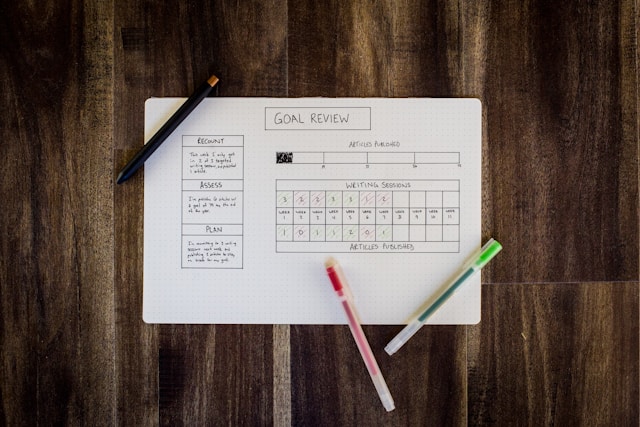
Set aside 20 minutes each week, perhaps on a Friday afternoon, to review your PDP.
What action steps did I complete this week?
What challenges did I face?
What are my action steps for next week?
This weekly touchpoint keeps your goals top-of-mind and allows for quick adjustments.
The Quarterly Deep Dive
Every three months, conduct a more significant review.
Revisit your 3-year vision. Is it still what you want?
Assess your progress on each SMART goal. Are you on track?
What have you learned? What new skills gaps have you identified?
Adjust your plan for the next quarter based on your progress and any changes in your career landscape.
Your PDP is a living document. It is not a stone tablet. It should change as you grow and as the market evolves. The value is not in sticking rigidly to a first draft, but in the ongoing process of reflection and intentional adjustment.
Making It Work in the African Context
Your plan must be grounded in your reality. This means accounting for:
Connectivity: Choose resources that can be downloaded for offline study to work around data costs and unreliable internet. Podcasts and audiobooks can be great for learning during commutes.
Resourcefulness: You may not have a large corporate training budget. Leverage free resources from platforms that offer financial aid, seek out mentorship within your existing network, and propose skill-swapping with peers.
The Hustle Culture: If you have a side hustle, integrate it into your plan. Your development goals for your side business are just as important as those for your day job. They are both part of "You, Inc."
A Professional Development Plan is the ultimate act of professional self-advocacy.
It is a declaration that you are not waiting for permission to grow. It transforms anxiety about the future into purposeful action in the present. The process itself—the auditing, the goal-setting, the weekly review—builds the very muscles of proactivity, strategic thinking, and self-discipline that are valued in any high-performer.
Your career is the longest project you will ever manage. Do not leave it to chance. Your first step is to open a new document. Title it "Professional Development Plan for [Your Name]." Write just one sentence today: your three-year vision. Describe the professional you see in the mirror three years from now. This single sentence is the seed from which your entire plan will grow. This week, you plant it. Next week, you begin to build the structure that will help it flourish.